Precision Quartz Glassware & Component Portfolio
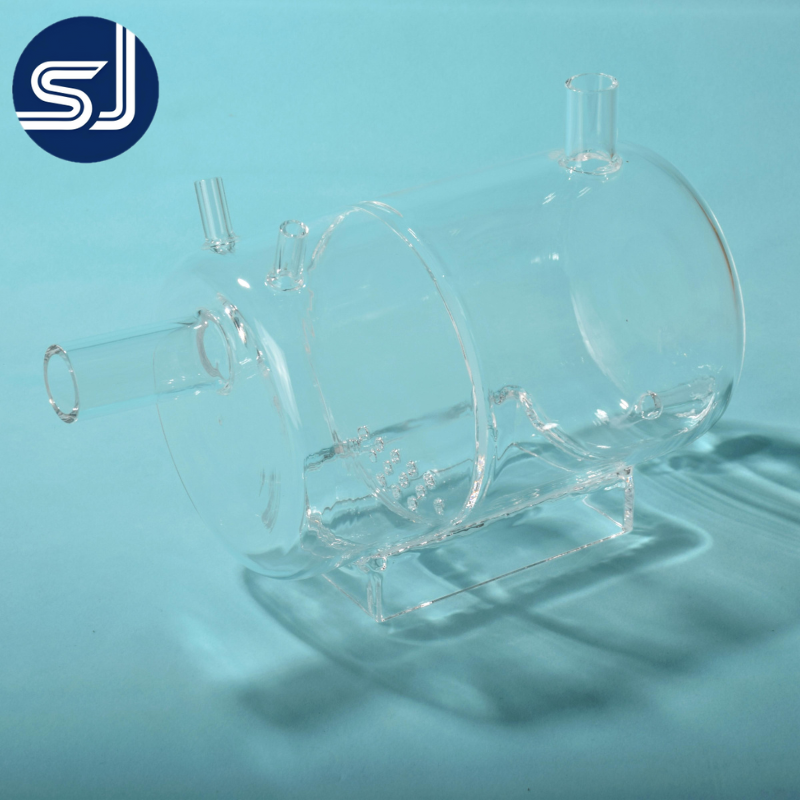
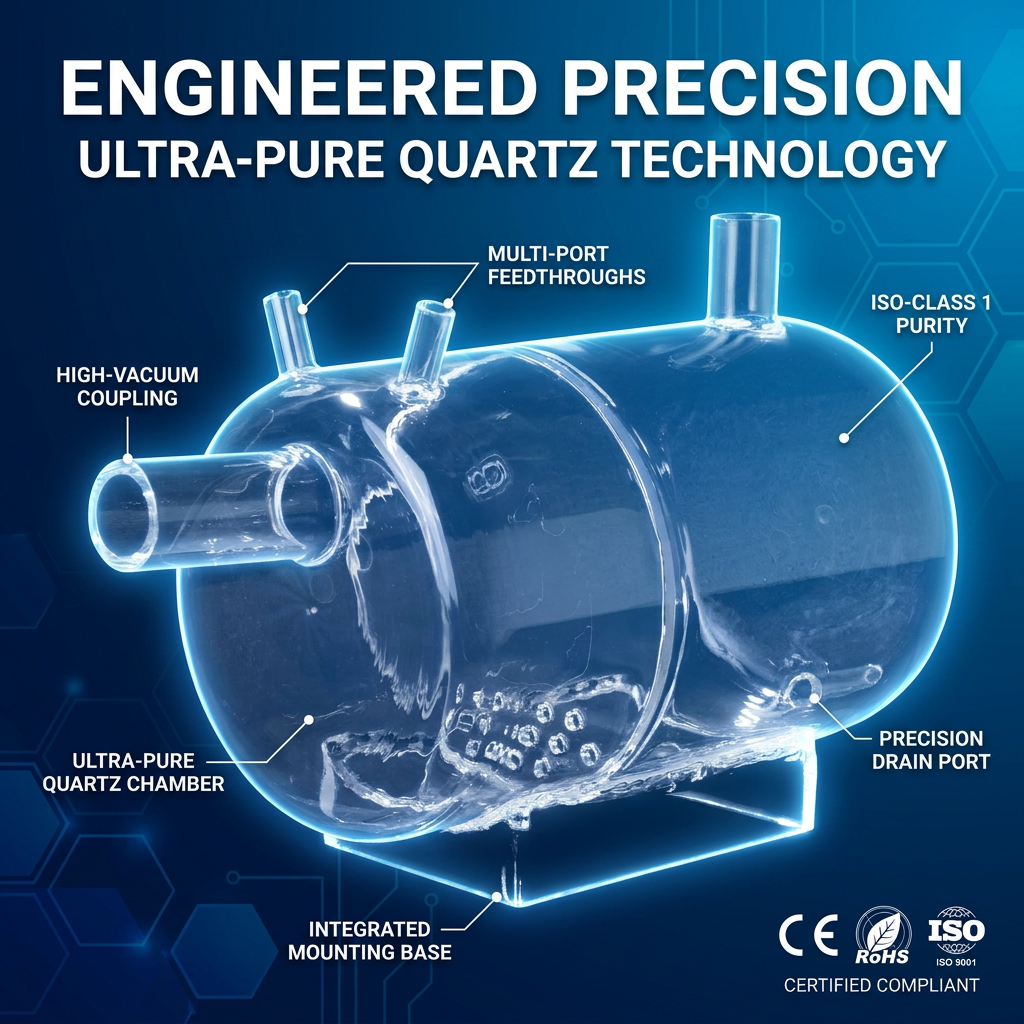
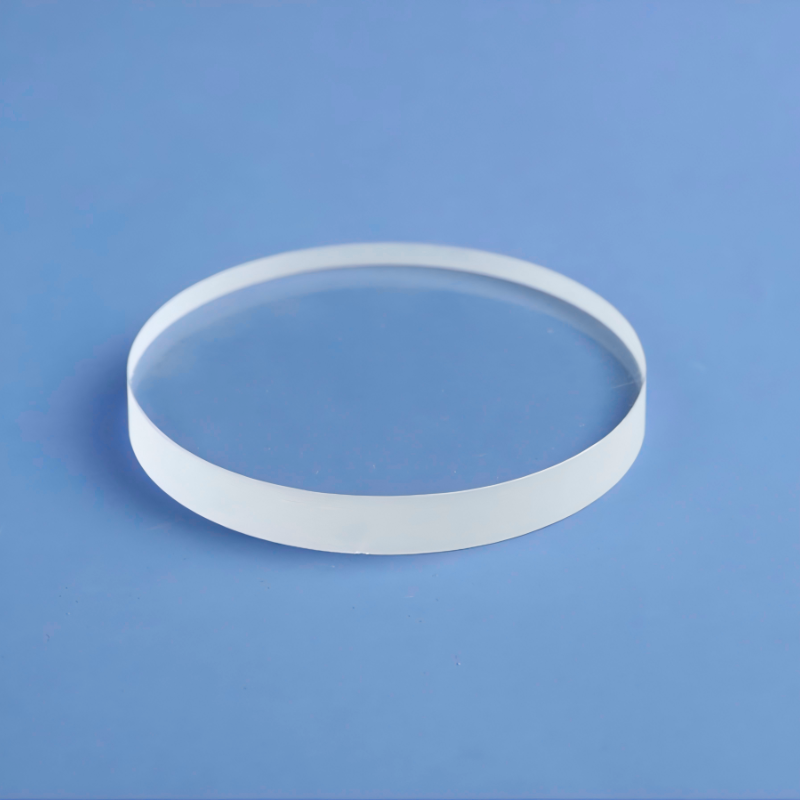
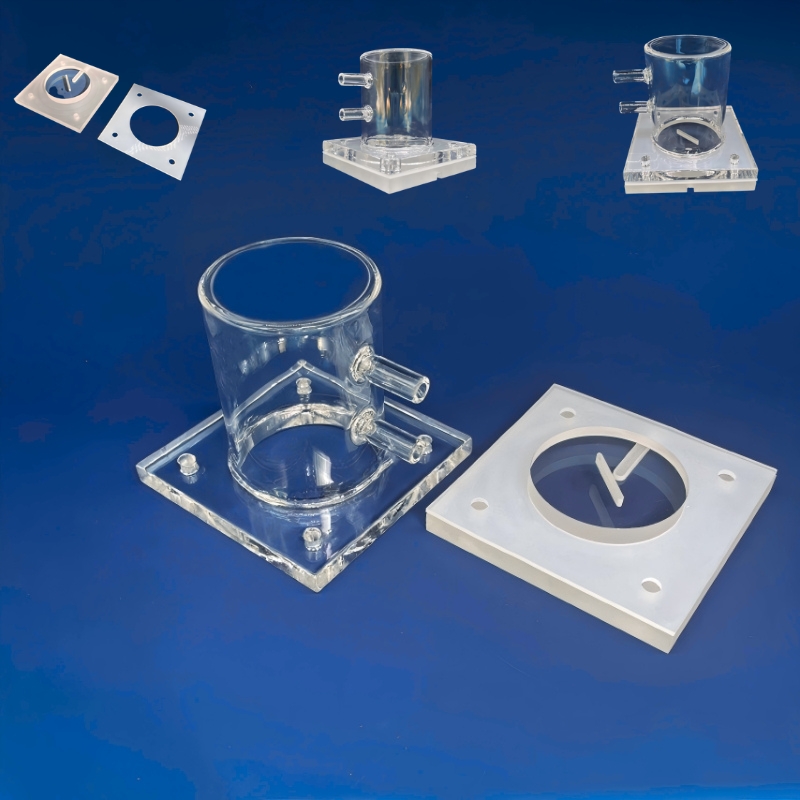
High-purity quartz flange rings, containers, tubes, and custom apparatus engineered for semiconductor, photovoltaic, and high-temperature laboratory applications.
Why Partner With Vulra Quartz
Direct from Donghai, Jiangsu — China's Crystal Capital. Verified manufacturing capabilities backed by rigorous third-party assessment and end-to-end quality control.
TÜV Rheinland Verified
Lianyungang Vulra Quartz Products Co., Ltd. undergoes rigorous on-site supplier verification by TÜV Rheinland. Legal entity, production capacity, cleanroom conditions, and export capabilities are independently authenticated.
Raw Material Traceability
Located at the hub of Donghai’s world-renowned high-purity natural quartz sand supply chain. We guarantee ultra-low alkali and transition metallic impurities (Fe < 0.2 ppm, Al < 10 ppm) ideal for semiconductor etch chambers.
Full Hot & Cold Machining
In-house flame working, CNC diamond-lathe milling, ultrasonic drilling, precision fire-polishing, and stress-relief annealing furnaces ensure zero micro-cracks and flawless optical surface finish (Ra < 0.2 µm).
1. Technical Fundamentals of Fused Quartz Flange Rings in Critical Environments
In modern ultra-high vacuum (UHV) and high-temperature processing equipment—such as chemical vapor deposition (CVD), atomic layer deposition (ALD), reduced-pressure epitaxy, and diffusion tube furnaces—the flange seal represents a critical thermal and structural boundary. A Quartz Flange Ring acts as a structurally rigid, chemically inert, and thermally stable interface linking reaction chambers to gas delivery lines, vacuum pumps, and quartz furnace liners.
Unlike metallic flanges (such as 316L stainless steel or Hastelloy), high-purity fused silica quartz flange rings demonstrate near-zero coefficient of thermal expansion (CTE = 5.5 × 10⁻⁷ /°C). This exceptionally low CTE allows quartz flange assemblies to undergo rapid thermal cycling from ambient temperature up to 1100°C without undergoing thermal shock cracking or dimensional alteration that could breach chamber seal integrity.
Engineering Insight: The structural integrity of a quartz flange ring under vacuum depends not only on geometric dimensions but also on the concentration of hydroxyl ions (OH⁻) within the fused silica glass network. Low-OH quartz (< 1 ppm) exhibits superior resistance to viscosity reduction and sag at working temperatures exceeding 1050°C.
Material Comparison Matrix: Chamber Flange Materials
| Property Parameter | High-Purity Fused Quartz | Synthetic Fused Silica | Alumina Ceramic (99.5% Al₂O₃) | 316L Stainless Steel |
|---|---|---|---|---|
| SiO₂ Purity Grade | 99.99% – 99.999% | > 99.9999% | N/A | N/A |
| Max Long-term Operating Temp | 1100°C | 1200°C | 1600°C | 650°C |
| Coeff. of Thermal Expansion (10⁻⁶/K) | 0.55 | 0.52 | 8.0 | 16.5 |
| Thermal Shock Resistance | Extreme (1000°C to water) | Extreme | Moderate | Low (Distorts) |
| Acid & Plasma Corrosion Resistance | Excellent (Except HF) | Superior | Moderate | Poor against Fluorine/Chlorine gas |
| Dielectric Strength (kV/mm) | 25 – 40 | 30 – 50 | 15 – 20 | Conductor |
Furthermore, semiconductor fabrication processes utilizing halogen plasmas (such as NF₃, CF₄, or SF₆ etching gas chemistries) demand component surfaces with low impurity desorptions. Vulra Quartz utilizes specialized fire-polishing and acid etching processes to passivate the surface layer of quartz flange rings, mitigating particle generation during aggressive plasma exposure.
2. Enterprise Engineering Capabilities: From Raw Sand to Precision Tolerances
Manufacturing semiconductor-grade quartz flange rings requires rigorous thermal control, precision grinding, and strict contamination-free handling. As a verified custom manufacturer certified by TÜV Rheinland, Lianyungang Vulra Quartz Products Co., Ltd. controls the complete value chain from raw crystal sand processing to final cleanroom packaging.
Advanced Processing Methodologies
- Precision Mechanical Machining: Utilizing 5-axis CNC diamond tooling, we execute complex chamfering, O-ring groove cutting, bolt hole drilling, and sealing face lapping to achieve flatness within 0.02 mm and roughness Ra < 0.2 µm.
- Thermal Stress Relief Annealing: High-temperature fusion welds and heavy-walled quartz flange rings undergo computer-controlled multi-stage annealing at 1150°C to completely neutralize internal thermal stress, preventing catastrophic thermal shock fracture during vacuum pump-down.
- Hydroxyl (OH⁻) Tuning: Depending on customer application (UV transparency vs. high-temperature load bearing), we adjust process atmospheres to control OH⁻ levels from high-purity electrical fusion (< 5 ppm OH⁻) to synthetic gas fusion (< 1 ppm OH⁻).
- Fire Polishing & Acid Etching: Machined surfaces undergo precise hydrogen-oxygen flame glazing to smooth microscopic tool marks, followed by high-purity hydrofluoric (HF) acid immersion to strip trace trace metal contamination before triple DI water rinsing.
Whether your application requires a single prototype oversized flange ring (up to 800mm outer diameter) or volume supply of standardized KF/CF quartz adapters, Vulra Quartz supports drawing-based OEM/ODM customization with an engine-backed feasibility review within 24 hours.
3. Technological Development Trends in Fused Quartz Component Design
As semiconductor node dimensions scale down to sub-3nm regimes and photovoltaic cells transition to high-efficiency TOPCon and HJT architectures, the performance demands on quartz flange rings and furnace components are shifting rapidly. Industry analysis highlights three main technological evolution vectors:
A. Ultra-Large Diameter Scaling (> 450mm to 800mm)
Next-generation semiconductor 300mm/450mm wafer processing and oversized PV diffusion tubes require massive quartz flanges with wall thicknesses exceeding 25mm. Producing large-bore quartz flange rings without thermal deflection or bubbles requires advanced electric arc fusion technology and oversized optical-grade quartz blocks.
B. Surface Engineering & Anti-Plasma Coating Integration
Fluorine-based plasma etching causes gradual recession of SiO₂ material, leading to particle detachment. Advanced research focuses on hybrid quartz structures, such as yttria-stabilized zirconia (YSZ) or alumina atomic layer deposition (ALD) barrier films coated onto the inner lip of quartz flange rings. This extends flange service life by 300% in chlorine/fluorine plasma chambers.
C. Low-Bubble, Low-Striae Optical & Structural Integrity
Microscopic inclusions and gas bubbles act as localized thermal stress concentrators under cyclic heat loads. Modern automated optical inspection (AOI) and laser cross-polarization birefringence mapping allow manufacturers to filter out micro-bubbles down to < 0.05 mm, ensuring maximum tensile strength (approx. 48 N/mm²) across the entire ring geometry.
4. Future Procurement Trends for B2B Quartzware Buyers
Navigating global high-purity quartz supply chains requires procurement teams and fab equipment engineers to evaluate total cost of ownership (TCO) rather than initial unit cost alone. Below are key strategic trends influencing global procurement strategies:
- On-Demand Prototyping & Flexible MOQ: Traditional glassworks required high batch minimums. Modern procurement favors agility—manufacturers that offer 1-piece sample fabrication allow engineering teams to validate prototype process chambers without locking capital in unproven inventory.
- Third-Party Authenticated Supply Chain Transparency: Fabs and Tier-1 equipment vendors increasingly demand verified supply chain audits (such as TÜV Rheinland, ISO9001, CE, and RoHS compliance) to mitigate risks associated with unverified trading intermediaries.
- Refurbishment & Closed-Loop Circular Economy: High-value oversized quartz flange rings damaged by surface devitrification (cristobalite formation) are now routinely sent back for precision machining, acid cleaning, and fire-polishing, restoring factory specs at 40% of new replacement cost.
- Export-Ready Structural Packaging: Fragile quartz glassware transit damages remain a primary pain point. Advanced suppliers utilize multi-layer shock-absorbing polyethylene foam, vacuum sealing, and custom wooden crate enclosures with tilt/shock sensors.
Frequently Asked Procurement & Technical Questions
Expert engineering responses addressing temperature limits, vacuum sealing methods, chemical compatibility, and ordering protocols.
What is the maximum continuous working temperature for quartz flange rings?
Our high-purity fused quartz flange rings operate continuously at temperatures up to 1100°C and can withstand short-term peak excursions up to 1450°C. The softening point of fused silica is approximately 1683°C. For vacuum applications operating above 1050°C, we recommend thicker wall designs or low-OH (< 5 ppm) quartz grades to prevent structural deformation or vacuum collapse.
How do you achieve a vacuum-tight seal with a quartz flange ring?
Quartz flange rings are typically sealed using fluoroelastomer (Viton), FFKM (Kalrez) O-rings, or high-purity flexible graphite gaskets housed within precision CNC-milled grooves on the quartz face. Fire-polished sealing surfaces ensure Ra < 0.2 µm, delivering leak rates lower than 1 × 10⁻⁹ mbar·L/s in helium leak detection testing.
What is the difference between natural fused quartz and synthetic fused silica?
Natural fused quartz is produced by melting high-purity natural quartz crystal sand (99.99%+ SiO₂), making it cost-effective for thermal furnaces, reaction tubes, and structural flanges. Synthetic fused silica is synthesized from liquid chemical precursors (e.g., SiCl₄), offering higher UV transmittance and ultra-low metallic impurities (< 0.1 ppm total metals), making it ideal for deep-UV optical windows and lithography equipment.
Can Vulra Quartz manufacture flange rings directly from custom 2D/3D CAD drawings?
Yes. We specialize in custom OEM/ODM manufacturing. You can provide STEP, DWG, DXF, or PDF drawings with custom dimensions, hole patterns, O-ring groove geometry, and surface finish specs. Our engineering team conducts a thorough mechanical and thermal stress feasibility review prior to quotation.
How does quartz perform against strong chemical acids and solvents?
Fused quartz exhibits outstanding chemical resistance against almost all inorganic acids (HCl, HNO₃, H₂SO₄, Aqua Regia) and organic solvents even at elevated temperatures. The only major chemicals that attack fused quartz are hydrofluoric acid (HF), phosphoric acid (H₃PO₄) above 150°C, and strong concentrated alkaline bases at high temperatures.
What lead times and minimum order quantities (MOQ) apply for custom orders?
Our baseline MOQ for custom quartz flange rings, rods, plates, and boats starts from just 1 piece for prototyping. Standard production lead times range between 7 to 15 business days depending on geometric complexity and required surface finishing processes.