Selecting a reliable Quartz Laboratory Furnace Boat supplier requires more than comparing catalog prices. These boats support high-temperature laboratory work, where purity, dimensional stability, and thermal shock resistance can affect every result. A minor surface flaw may become a serious contamination concern during repeated heating cycles.
This guide examines ten suppliers serving research laboratories, semiconductor facilities, universities, and industrial testing teams. The comparison considers quartz purity, manufacturing consistency, boat dimensions, wall thickness, temperature performance, and customization options. It also reviews production experience, inspection practices, packaging quality, and technical support. These details matter when a boat must fit precisely inside a tube furnace or hold samples without unwanted movement.
Real laboratory conditions are rarely perfect. Operators may load uneven samples, handle hot equipment too quickly, or reuse boats longer than recommended. Good suppliers recognize these practical problems and provide clear handling guidance. They should explain cleaning methods, replacement intervals, and suitable furnace conditions. Not every supplier publishes the same level of technical information. That gap deserves attention.
A trustworthy manufacturer should offer traceable specifications and responsive communication. Certifications can help, but they do not replace practical evidence. Product photographs, sample evaluations, and consistent customer feedback provide useful context. This ranking is therefore intended as a practical starting point, not an absolute verdict. Application requirements differ. A boat designed for small research samples may not suit continuous production work. Readers should verify dimensions, purity grades, lead times, and compatibility before purchasing. That final check can prevent costly mistakes.
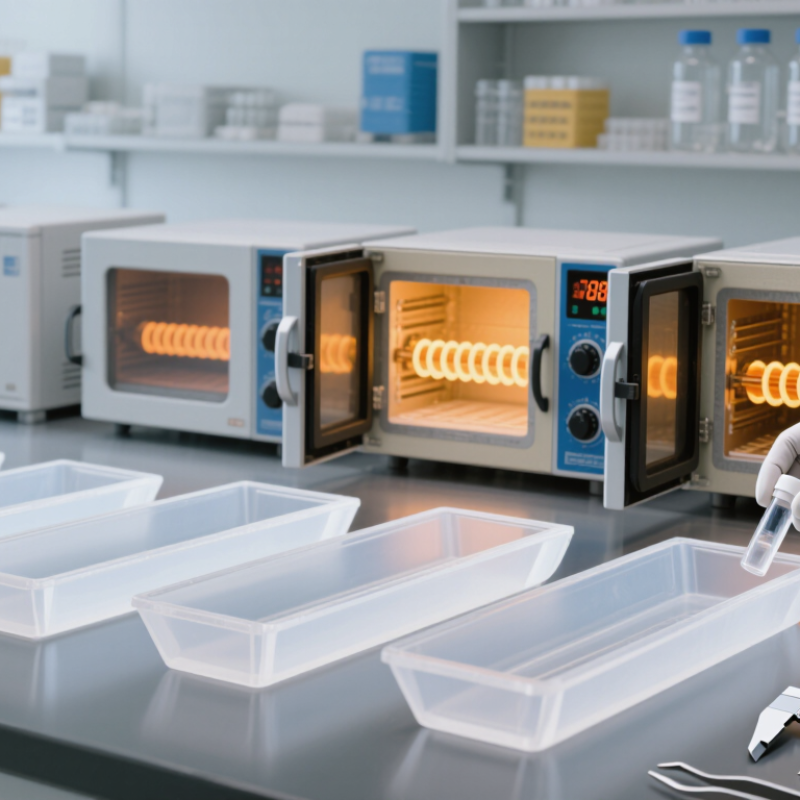
Top 10 Quartz Laboratory Furnace Boat Suppliers
Quartz laboratory furnace boats support controlled heating, annealing, drying, and material treatment in high-temperature research. Their fused quartz construction tolerates repeated heating while limiting metal contamination. A well-designed boat also supports even sample exposure and stable placement inside the furnace tube.
Common designs include shallow trays, covered boats, and slotted carriers. Dimensions must match the furnace chamber, gas flow, and sample weight. Smooth edges reduce particle shedding during loading. However, quartz is not indestructible. Sudden temperature changes, uneven loading, or rough handling can cause cracks. A boat may look clean but still retain residue in tiny surface marks. This detail is easy to underestimate.
Tips: Check the maximum working temperature, wall thickness, and thermal expansion behavior before ordering. Ask suppliers about dimensional tolerances and cleaning procedures. Inspect every boat under bright light before use. Keep a record of heating cycles, because service life depends on more than temperature alone. In practice, the cheapest option may become costly after one failure. Supplier reliability also matters; clear drawings, traceable inspection, and responsive technical support indicate stronger manufacturing control. Specialized shapes can improve handling, but they may complicate cleaning. Simpler designs are often safer for routine laboratory work.
Top 10 Quartz Laboratory Furnace Boat Suppliers
Essential Criteria for Evaluating Quartz Furnace Boat Suppliers
SEMI’s World Fab Forecast projected semiconductor manufacturing capacity growth of about 6% in 2024 and 7% in 2025. This expansion increases demand for stable quartz furnace boats. Supplier evaluation should begin with quartz purity, wall thickness, dimensional accuracy, and thermal-cycle performance. A boat may look flawless, yet microscopic contamination can damage wafer yields. Ask for lot-specific certificates, inspection records, and documented cleaning procedures. ISO 9001 certification supports process control, but it does not replace technical evidence.
Experienced buyers also examine deformation after repeated high-temperature exposure. Request test data at your actual operating temperature, not only standard laboratory conditions. Check loading capacity, slot spacing, surface roughness, and compatibility with your furnace design. SEMI manufacturing outlook data shows continuing investment pressure across advanced production lines, making delivery reliability increasingly important. Confirm lead times, replacement capacity, packaging methods, and communication during nonconformities. Price alone can become expensive.
Tips: Compare three sample boats under identical thermal cycles. Measure warpage before and after testing. Review particle results, not just appearance. Keep one approved sample as a reference standard. This simple step prevents confusing design changes with quality improvements.
Supplier audits should include production records, traceability, and corrective-action history. Ask how rejected quartz is isolated and how operators verify dimensions. Some suppliers provide impressive reports but weak follow-up. That matters. A practical evaluation should combine documents, sample testing, and factory experience. The process is not perfect, and internal assumptions deserve regular review.
| Rank | Supplier Profile | Quartz Material Purity | Recommended Continuous Operating Temperature | Maximum Short-Term Temperature | Available Manufacturing Methods | Dimensional Capability | Typical Wall Thickness | Dimensional Tolerance | Surface Finish | Quality Documentation | Typical Production Lead Time | Evaluation Score |
|---|---|---|---|---|---|---|---|---|---|---|---|---|
| 1 | Supplier Profile 01 | High-purity fused quartz, typically 99.99% SiO₂ or higher | Up to approximately 1,100–1,200 °C for repeated laboratory use | Approximately 1,300 °C for short exposure, subject to thermal-shock control | Heat forming, flame working, CNC cutting, drilling and edge finishing | Custom boats from small laboratory sizes to approximately 600 mm length | 2–8 mm, depending on length and load | Typically ±0.5–1.0 mm for standard dimensions | Polished or fire-polished contact surfaces; optional matte exterior | Material certificate, dimensional inspection report and visual inspection record | 2–4 weeks for standard designs; 4–8 weeks for custom tooling | 94/100 |
| 2 | Supplier Profile 02 | Fused quartz with documented low metallic contamination | Approximately 1,100 °C under controlled atmosphere conditions | Approximately 1,250–1,300 °C for limited-duration cycles | Pressed forming, flame shaping, precision trimming and slot machining | Standard and custom boats up to approximately 500 mm length | 2–6 mm | Typically ±0.5 mm on critical dimensions | Flame-polished edges with smooth internal surfaces | Certificate of conformity, lot traceability and inspection checklist | 3–5 weeks for repeat orders | 92/100 |
| 3 | Supplier Profile 03 | UV-grade or semiconductor-grade fused quartz options available | Approximately 1,050–1,200 °C depending on atmosphere and geometry | Up to approximately 1,300 °C with gradual heating and cooling | Precision flame working, CNC machining and custom support fabrication | Boats, trays and carriers from approximately 50 to 450 mm | 1.5–7 mm | Typically ±0.3–0.8 mm for machined features | Polished, fire-polished or controlled roughness surfaces | Material lot records, dimensional report and photographs before shipment | 3–6 weeks | 90/100 |
| 4 | Supplier Profile 04 | High-purity quartz suitable for laboratory thermal processing | Approximately 1,000–1,150 °C for routine cycles | Approximately 1,250 °C for short-term operation | Thermoforming, grinding, drilling and precision edge treatment | Typical working range from 75 to 400 mm length | 2–8 mm | Typically ±1.0 mm for formed components | Fire-polished rim and rounded corners to reduce particle generation | Basic certificate of conformity and final visual inspection record | 2–5 weeks | 88/100 |
| 5 | Supplier Profile 05 | 99.99% SiO₂ fused quartz with optional higher-purity material | Approximately 1,100 °C for repeated furnace cycles | Approximately 1,300 °C when ramp rates are controlled | Flame fabrication, slotting, hole drilling and custom rack integration | Custom boat lengths up to approximately 350 mm | 2–5 mm | Typically ±0.5–1.0 mm | Smooth formed surfaces; optional polishing for critical contact zones | Inspection report, raw-material declaration and packaging specification | 4–7 weeks | 86/100 |
| 6 | Supplier Profile 06 | Laboratory-grade fused quartz with standard purity documentation | Approximately 1,000–1,100 °C | Approximately 1,200–1,250 °C for brief periods | Heat forming, sawing, grinding and manual finishing | Common sizes from 50 to 300 mm length | 2–6 mm | Typically ±1.0 mm | Fire-polished or ground finish, depending on application | Certificate of conformity and basic dimensional check | 2–4 weeks for standard sizes | 84/100 |
| 7 | Supplier Profile 07 | High-purity fused silica for general laboratory furnace use | Approximately 1,000–1,150 °C | Approximately 1,250 °C with appropriate thermal ramping | Forming, CNC trimming, drilling and surface grinding | Small and medium boats up to approximately 300 mm | 2–6 mm | Typically ±0.8–1.2 mm | Ground or fire-polished edges | Material declaration, final inspection and packing record | 3–6 weeks | 82/100 |
| 8 | Supplier Profile 08 | Standard high-purity quartz for non-contamination-critical processes | Approximately 950–1,100 °C | Approximately 1,200 °C for limited exposure | Manual forming, cutting, drilling and edge smoothing | Standard boats from approximately 50 to 250 mm | 2–5 mm | Typically ±1.0–1.5 mm | Standard fire-polished or ground finish | Basic material and dimensional documentation available | 2–5 weeks | 79/100 |
| 9 | Supplier Profile 09 | Fused quartz suitable for general-purpose heat treatment | Approximately 950–1,100 °C | Approximately 1,200–1,250 °C depending on design | Heat forming, grinding and basic drilling | Mostly standard sizes up to approximately 200 mm | 2–5 mm | Typically ±1.0–1.5 mm | Ground edges with optional fire polishing | Certificate of conformity available upon request | 3–6 weeks | 76/100 |
| 10 | Supplier Profile 10 | Commercial high-purity quartz for routine laboratory applications | Approximately 900–1,050 °C | Approximately 1,150–1,200 °C for short-term cycles | Basic forming, cutting and manual finishing | Standard laboratory boats generally up to approximately 150 mm | 2–4 mm | Typically ±1.5 mm | Standard formed finish | Basic product specification and visual inspection confirmation | 2–4 weeks for catalog items | 73/100 |
Evaluation note: Temperature limits, purity levels, tolerances and lead times are industry-reference ranges for comparing anonymized supplier profiles. Final suitability should be confirmed through a technical drawing, thermal-cycle specification, material certificate and sample inspection.
Choosing among the top 10 quartz laboratory furnace boat suppliers requires more than comparing prices. A dependable supplier should provide high-purity quartz boats, stable dimensions, and clear manufacturing records. In laboratory use, a boat may face repeated heating near 1,000°C or higher. Small defects can cause cracking, contamination, or uneven sample placement.
Look for suppliers that explain quartz grade, wall thickness, surface finish, and temperature limits. Ask for inspection reports, dimensional tolerances, and traceability documents. Practical details matter. A smooth inner surface helps reduce residue. Reinforced edges can improve handling during loading and unloading.
Secure packaging is also essential because hairline damage may remain invisible until heating. Too often, buyers focus only on capacity. That is a weakness. The best selection also considers furnace compatibility, sample weight, cleaning methods, and replacement availability. A supplier that answers technical questions precisely usually demonstrates stronger expertise. Still, published data should be checked against actual application conditions. Laboratory results can differ from catalog expectations. Sample testing is wise before placing a large order.
A credible Top 10 list should compare furnace-boat suppliers by evidence, not visibility. Capability begins with quartz purity, wall-thickness control, machining accuracy, and thermal-cycle testing. High-purity fused quartz reduces contamination during oxidation, diffusion, and annealing. SEMI’s 2024 World Fab Forecast tracks more than 1,400 fab and production-line projects worldwide. That scale increases demand for repeatable consumables. Still, supplier rankings can mislead. A large catalog does not prove stable boat geometry.
Compare material grades, maximum service temperatures, dimensional tolerances, and cleaning methods. Ask for traceability records, inspection reports, and samples from multiple production lots.
The Semiconductor Industry Association reported global semiconductor sales of 526.9 billion dollars in 2023. This signals a demanding process environment, although it does not measure quartz boats directly.
Customization separates capable suppliers from simple resellers. Useful options include slotted boats, wafer-count changes, reinforced rims, drain channels, and carrier-specific dimensions.
Check whether drawings, prototypes, and revision control are included. A cheaper quote may exclude tooling, packaging, or replacement lead time. That omission can distort total cost.
Tips:
Build a weighted scorecard. Give purity and tolerance the highest weights. Request three consecutive-lot samples. Test them through your actual thermal recipe. Record warpage, discoloration, particle counts, and breakage. Even careful comparisons can miss long-term thermal fatigue. Procurement decisions need periodic review.
Top 10 Quartz Laboratory Furnace Boat Suppliers
How to Select the Right Quartz Furnace Boat Supplier for Your Laboratory
Selecting a quartz furnace boat supplier requires more than comparing prices. Start with the boat’s working temperature, furnace dimensions, and sample load. A reliable supplier should provide clear drawings, dimensional tolerances, and quartz purity data. Ask whether the material suits repeated thermal cycling without cracking or deforming.
Inspect the supplier’s manufacturing experience. Look for controlled forming, smooth edges, consistent wall thickness, and careful cleaning procedures. These details reduce particle shedding inside a furnace tube. Request inspection records, batch traceability, and a certificate confirming the material grade. Quality systems matter, but practical evidence matters more.
I once underestimated the importance of boat balance. A slightly uneven boat shifted during loading and wasted a test cycle. That mistake was expensive. Request a sample when possible, then check its fit with your furnace tweezers and loading mechanism. Discuss custom dimensions, replacement timing, packaging, and technical support before placing a larger order. Good communication is essential.
Do not ignore delivery reliability. Ask about production capacity, lead times, and responses to damaged shipments. A supplier with realistic answers is often safer than one promising everything immediately. Compare at least ten qualified suppliers using the same checklist. Review their technical documents carefully. Small omissions can become large laboratory problems.
When comparing quartz furnace boat suppliers, verify the material grade, dimensional tolerance, thermal performance, wafer capacity, surface finish, and documentation. The reference temperatures below are typical fused-quartz benchmarks and should be confirmed against the supplier’s specifications for the intended process.
It holds samples during controlled heating, annealing, drying, or material treatment. It supports stable placement and even exposure inside a furnace tube.
Fused quartz tolerates repeated high-temperature cycles and helps limit metal contamination. It is useful, but not indestructible.
Shallow trays suit routine work, while covered boats protect samples from falling particles. Slotted carriers can improve gas flow and sample separation. Simple shapes are often easier to clean.
Confirm the furnace chamber size, gas-flow path, sample weight, and loading method. Check wall thickness and dimensional tolerances. A small mismatch can disrupt loading.
Examine it under bright light for cracks, chips, residue, and uneven edges. Check the base for warpage. A clean appearance is not proof of cleanliness.
Compare quartz purity, wall thickness, dimensional accuracy, cleaning procedures, and thermal-cycle data. Request lot-specific certificates and inspection records. Price alone is a weak measure.
Ask for clear drawings, material-grade certificates, batch traceability, and dimensional inspection results. Review corrective-action history and packaging methods. Good reports still need practical verification.
Test sample boats under identical thermal cycles at the actual operating temperature. Measure warpage before and after testing. Review particle results, not only appearance.
A delayed replacement can interrupt experiments and waste scheduled furnace time. Ask about lead times, replacement capacity, damaged-shipment responses, and communication. Clear answers matter.
Do not rely only on low price, attractive appearance, or general certification. Ignoring balance once caused a wasted test cycle in the source experience. I might still underestimate it.
This guide explains the purpose, design, and key applications of the Quartz Laboratory Furnace Boat in laboratory heating, thermal processing, material research, and semiconductor-related experiments. It describes how quartz boats are valued for their high temperature resistance, chemical stability, low contamination risk, and transparent structure. Readers will also learn which technical factors matter when evaluating suppliers, including quartz purity, dimensional accuracy, wall thickness, surface quality, temperature performance, production consistency, quality control, and delivery reliability.
The article presents a practical framework for comparing supplier capabilities, material grades, manufacturing methods, customization services, packaging, and technical support without focusing on specific brands. It also outlines how laboratories can select the most suitable supplier by considering furnace compatibility, sample capacity, operating temperature, cleaning requirements, budget, order volume, and expected service life. By applying these criteria, buyers can make informed decisions and obtain quartz furnace boats that provide dependable performance, safe handling, and consistent results across repeated laboratory processes.