Choosing the right Fused Quartz Square Plate requires more than comparing dimensions and prices. In laboratory, optical, and high-temperature applications, small material differences can affect reliability. Quartz purity, thickness, surface finish, flatness, and edge quality all deserve careful attention. A plate that looks clear may still show stress, waviness, or polishing marks under inspection lighting.
Start with the working conditions. Confirm the required wavelength range, operating temperature, thermal cycling, and chemical exposure. Fused quartz performs well in many demanding environments, but every grade has practical limits. Check whether the plate needs ultraviolet transmission, low expansion, or improved resistance to repeated heating. Measure the actual space around the plate, including clamps and mounting holes. A perfect fit on paper may fail during installation.
Details matter. They really do. Ask the supplier for material specifications, dimensional tolerances, surface quality, flatness data, and inspection records. Reliable manufacturers should provide traceability and consistent packaging. Inspect the delivered plate for chips, scratches, contamination, and uneven edges before use. I have seen projects delayed because a supposedly standard plate required custom mounting. That mistake was avoidable, although not always obvious at the purchasing stage.
This guide explains how to compare Fused Quartz Square Plate options with greater confidence. It considers performance, application risk, supplier credibility, and long-term value. Cost remains important, but the cheapest plate can become expensive after replacement, alignment problems, or failed testing. Some recommendations may still require professional review, especially for precision optical systems. Choose based on verified evidence, not attractive product descriptions alone.
What Is a Fused Quartz Square Plate?
How to Choose the Right Fused Quartz Square Plate?
What Is a Fused Quartz Square Plate?
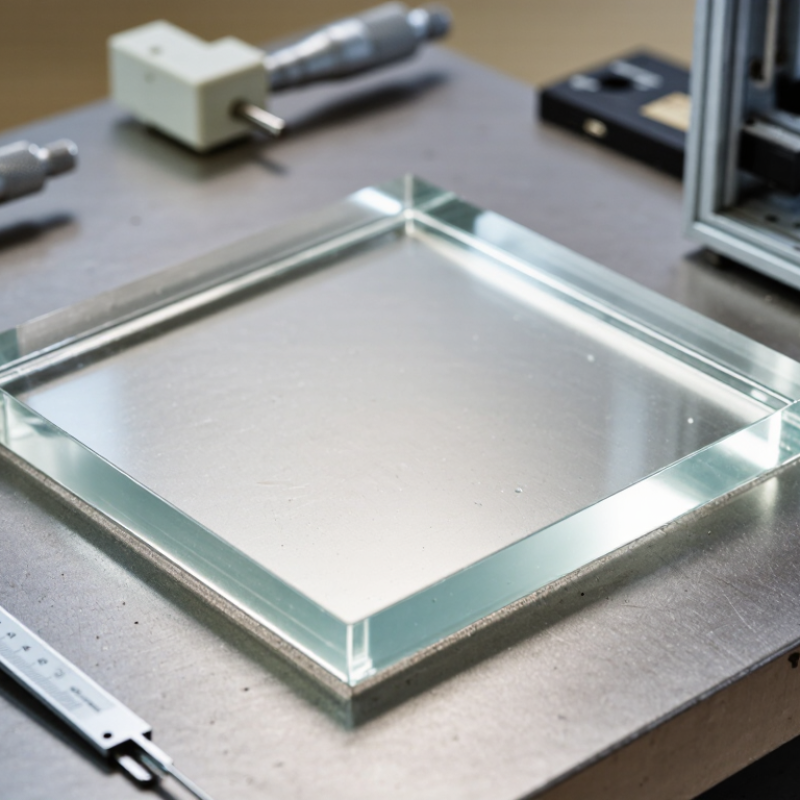
A fused quartz square plate is a flat, rigid component made from high-purity silicon dioxide glass. Unlike ordinary glass, it tolerates sudden temperature changes with less risk of cracking. It also offers strong transmission across ultraviolet, visible, and near-infrared wavelengths. These properties make it useful in laboratory windows, optical fixtures, thermal equipment, and analytical instruments.
Its performance depends on more than its material name. During practical selection, check the plate’s length, width, thickness, surface flatness, and edge finish. A thin plate may reduce weight, but it can flex during handling. A thicker plate offers better stability, although it adds cost and mass. For optical work, polishing quality and parallelism deserve careful attention. For heating applications, confirm the expected temperature range and thermal cycling conditions.
Tips: Define the working environment before choosing a plate. Ask for test data when optical transmission matters. Inspect edges for chips, especially on larger plates. Keep the surface clean with suitable laboratory methods. Small scratches can become serious weak points. It is also wise to review the design after initial testing. My first choice is not always the best one, particularly when mounting stress or uneven heating was underestimated. Supplier documentation should clearly state tolerances, inspection methods, and material grade.
Which Material Properties Matter for Your Application?
How to Choose the Right Fused Quartz Square Plate?
Which Material Properties Matter for Your Application?
Material purity controls more than appearance. Trace metals can increase absorption, discoloration, and thermal stress. For ultraviolet work, request transmission data at your operating wavelength, not only a generic “high purity” statement. ASTM E438 and ISO 10110 provide useful frameworks for glass quality and optical inspection.
Thermal stability is often the deciding factor.
Reference values compiled from ASTM E228 measurements place fused quartz expansion near 0.55 ppm/K. Its softening point is approximately 1,670°C, according to technical glass-property databases. These values explain its performance near heaters, plasma chambers, and rapid temperature changes. Still, the plate can crack when one corner heats first.
Surface finish also deserves careful attention.
A rough surface scatters light and traps residue. For optical applications, specify flatness, parallelism, scratch-dig quality, and edge condition separately. For processing fixtures, chemical resistance may matter more than optical clarity. ASTM C799 testing can help assess resistance to aggressive environments, but supplier data should match your actual chemicals and temperature cycle.
I would not choose by thickness alone.
A thin plate may survive heating better, yet flex under clamping. A thicker plate may remain flat but store more thermal stress. Test a small sample with your real load, cleaning method, and heating rate. That practical check often reveals the specification you forgot.
How to Select the Correct Size and Thickness
How to Choose the Right Fused Quartz Square Plate?
How to Select the Correct Size and Thickness
Choosing the right fused quartz square plate starts with its working area. Measure the space carefully, including clamps, seals, and surrounding hardware. A plate that barely fits may become difficult to install. Leave a small clearance for thermal movement and handling. In practical projects, the usable area matters more than the outside dimension alone.
Thickness depends on load, span, temperature, and support conditions. A thin plate may work for a small optical window. It can bend or crack when the unsupported span increases. For heated equipment, consider temperature changes rather than temperature alone. Uneven heating creates stress across the quartz surface. Flat support is essential. Edge contact can cause failure. Ask for thickness tolerance, flatness, surface quality, and inspection records before ordering.
I have found that designers sometimes choose extra thickness for peace of mind. That choice is not always efficient. Excess material can increase weight, cost, and thermal response time. I once saw a drawing that ignored the frame opening by only a few millimeters. The plate passed the calculation but failed during installation. Recheck every dimension. Confirm whether the plate will face vibration, pressure, chemicals, or repeated heating cycles. When the application is uncertain, provide the supplier with real operating conditions and request a documented recommendation. Surface scratches also deserve attention. Small marks may become stress points under repeated thermal cycling.
How to Evaluate Optical, Thermal, and Surface Quality
When choosing a fused quartz square plate, evaluate its optical quality under your actual working wavelength. A plate may look clear while hiding bubbles, inclusions, or slight haze. Request transmission data, refractive uniformity, and flatness results from calibrated instruments. An interferometer report is more useful than a supplier’s general claim. Check edge chips carefully, because small damage can spread during mounting.
Thermal performance also deserves practical testing. Confirm the material grade, thermal expansion data, and recommended operating range. A plate exposed to a hot chamber should be annealed properly. Otherwise, internal stress may cause distortion during heating or cooling. Test it through several temperature cycles when the application is sensitive. I once trusted a visual inspection too quickly. That was a mistake. Appearance deceives.
Surface quality affects cleaning, sealing, and image accuracy. Review scratch-dig limits, roughness values, and surface flatness separately. A polished face can still contain shallow marks that collect residue. Use bright, angled light during inspection, then verify results with suitable measuring equipment. Handle the plate with powder-free gloves and store it in a clean protective case. In my experience, surface data is often overlooked until installation begins. That delay can be expensive. Ask for inspection records, measurement conditions, and dimensional tolerances before approval. A clear specification prevents many avoidable disagreements.
How to Compare Suppliers, Standards, and Total Cost
Choosing the right fused quartz square plate starts with the application, not the catalog. Define the required length, width, thickness, flatness, surface finish, and edge condition. Confirm whether the plate will face rapid heating, ultraviolet exposure, vacuum service, or chemical contact. Fused quartz tolerates high temperatures well, but performance still depends on purity, machining quality, and thermal gradients. Small cracks near corners may grow during repeated heating. Measure twice.
When comparing suppliers, request a dimensional inspection report, material certificate, lot traceability, and stated testing methods. Ask which standards apply to the order, such as ASTM or ISO-based procedures, and confirm the exact revision. A certificate without a lot number is weak evidence. Reliable suppliers should explain tolerances clearly, including warpage and thickness variation. They should also describe protective packaging. I have seen low-priced plates arrive with chipped edges because packaging was treated as an afterthought.
Tips: Compare total cost, not unit price. Include tooling, inspection, custom cutting, packaging, shipping, import charges, replacement risk, and lead time. Ask for sample photos and one trial piece before placing a large order. Review how rejected parts are handled. A slightly higher quotation may reduce production delays, but that is not always true. Check the assumptions. Also compare payment terms and minimum order quantities. The cheapest option can become expensive when one damaged plate interrupts a calibrated process.
How to Choose the Right Fused Quartz Square Plate?
A practical comparison of technical fit, standards evidence, and total landed cost
The chart uses a transparent procurement scorecard rather than company or brand data. Technical fit covers plate dimensions, surface quality, thermal performance, and chemical compatibility. Standards evidence should include material traceability, a quality-management certificate such as ISO 9001, and calibrated inspection records from an ISO/IEC 17025 laboratory when measurement results are required. Total cost should include the quoted plate, machining, inspection, packaging, freight, and expected replacement risk. Fused silica commonly has a very low coefficient of thermal expansion of approximately 0.55 × 10⁻⁶/K and a softening point near 1,665°C, but the supplier’s certificate and drawing must confirm the actual grade and tolerance.
FAQS
High purity reduces absorption, discoloration, and thermal stress. Trace metals can affect ultraviolet transmission. Request transmission data at your actual operating wavelength.
Fused quartz expands very little, near 0.55 ppm/K. Its softening point is about 1,670°C. However, one heated corner can still cause cracking. Uneven heating matters.
Specify flatness, parallelism, scratch-dig quality, and edge condition separately. A rough surface scatters light and traps residue. Small scratches may become stress points during repeated heating.
Measure the usable working area, not only the outer dimensions. Include clamps, seals, frames, and nearby hardware. Leave slight clearance for movement and handling. A tight fit can complicate installation.
Thickness depends on load, unsupported span, temperature, and support conditions. Thin plates may bend across larger openings. Thick plates may stay flatter but store more thermal stress. More material is not always better.
Use flat, even support across the plate. Avoid concentrated edge contact. Check vibration, pressure, and clamping forces. I might overlook the frame opening without a detailed drawing.
Yes, test a small sample under real conditions. Use the actual load, cleaning method, heating rate, and temperature cycle. This may reveal a missing specification. Practical testing helps.
Request thickness tolerance, flatness, surface quality, edge details, and inspection records. Provide real chemicals and operating temperatures. Also describe repeated heating, pressure, and vibration. Generic data may be insufficient.
Conclusion
Choosing the right Fused Quartz Square Plate begins with understanding its role in your process. Made from high-purity silica, it is valued for excellent thermal stability, low thermal expansion, strong chemical resistance, and reliable performance across a wide temperature range. The best material grade depends on the application, especially when exposure to heat, corrosive chemicals, vacuum conditions, or ultraviolet light is expected.
Before purchasing, confirm the required length, width, thickness, tolerances, and edge design to ensure proper installation and mechanical stability. Optical clarity, surface finish, flatness, cleanliness, and resistance to thermal shock should also be evaluated according to operating needs. When comparing suppliers, review quality-control procedures, inspection records, applicable industry standards, customization capabilities, lead times, packaging, and after-sales support. A careful assessment of both purchase price and total operating cost will help you select a dependable plate that delivers consistent performance and long service life.